

Recruitment and neurodiversity – why equity matters
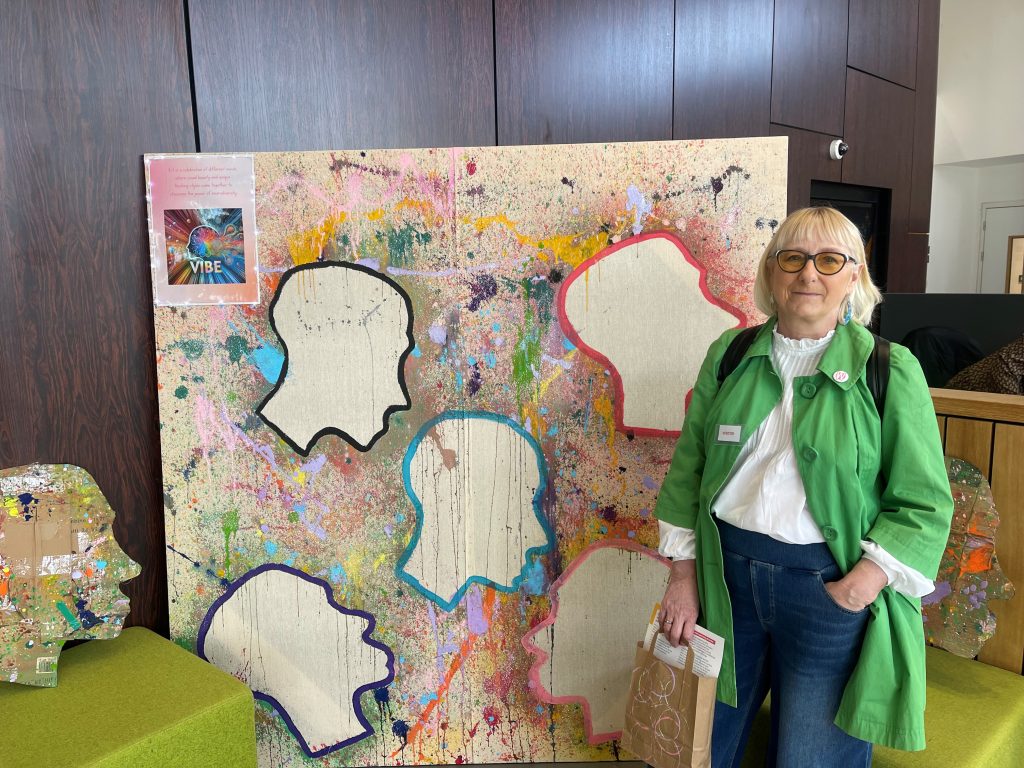
Pictured above: Lorraine Gillies
In my time, I’ve applied for many, many, many roles. Mostly unsuccessful.
Despite this, I’ve had (and am still enjoying) a really good career. I’m on the board of Community Justice Scotland. And because of this, I recently participated in a workshop at The Scottish Government. Inclusive recruitment was a key discussion point in that session, and it got me thinking. Mostly, my employment opportunities have been achieved through non-traditional routes.
Interviews and applications don’t really work for me. In fact, I’m really rubbish at it. Turns out, I’m not alone. Most of my neurodivergent colleagues tell me something similar. It’s a thing – recruitment and neurodiversity.
Traditional recruitment processes can present a range of challenges for neurodivergent people, often due to a mismatch between the structure of these processes and the communication, sensory or cognitive preferences of individuals.
Here are some of the key challenges:
- Communication Style Mismatches
- Interviews often prioritise verbal fluency and social cues, which may disadvantage neurodivergent candidates who communicate differently or struggle with small talk, eye contact or interpreting body language.
- Abstract or vague questions (e.g. “Tell me about a time you overcame a challenge”) can be difficult to answer without a clear context or structure.
- Sensory Sensitivities
- In-person interviews in unfamiliar, noisy or brightly lit environments can be overwhelming.
- Online interviews may still pose challenges if there are unexpected changes, unclear instructions or technical issues.
- Unstructured or Ambiguous Processes
- Job descriptions may be unclear or overly broad, making it hard to determine if the role is a good fit.
- Application forms with open-ended questions or unclear expectations can be difficult to navigate.
- Bias and Misunderstanding
- Recruiters may misinterpret neurodivergent traits (e.g. lack of eye contact, monotone voice or literal responses) as disinterest or lack of competence.
- There may be unconscious bias or a lack of awareness about neurodivergence in hiring teams.
- Emphasis on “Culture Fit”
- Hiring for “culture fit” can unintentionally exclude neurodivergent candidates who may not conform to typical social norms but are still highly capable.
- Hiring for “culture fit” can unintentionally exclude neurodivergent candidates who may not conform to typical social norms but are still highly capable.
- Limited Opportunities for Skill Demonstration
- Traditional interviews may not allow neurodivergent candidates to demonstrate their strengths, especially if they excel in technical or detail-oriented tasks rather than interpersonal communication.
- Traditional interviews may not allow neurodivergent candidates to demonstrate their strengths, especially if they excel in technical or detail-oriented tasks rather than interpersonal communication.
- Disclosure Dilemma
- Candidates may feel unsure about whether to disclose their diagnosis, fearing stigma or discrimination, yet disclosure might be necessary to request accommodations.
- Candidates may feel unsure about whether to disclose their diagnosis, fearing stigma or discrimination, yet disclosure might be necessary to request accommodations.
So, what if we did things differently? What would be possible?
In recruiting, equity matters more than equality because it ensures that all candidates have a fair chance to succeed, not just an equal one. Here’s how that plays out:
Equality in Recruiting
Everyone goes through the same process: same application form, same interview questions, same assessments.
Sounds fair – but it assumes everyone has the same background, resources, and abilities.
Equity in Recruiting
The process is adapted to meet different candidates’ needs so they can all demonstrate their potential.
This might include:
- providing interview questions in advance for neurodivergent candidates (or for anyone!)
- offering alternative assessment formats (e.g. practical tasks instead of verbal interviews)
- allowing extra time or quiet spaces for those with sensory sensitivities.
- using structured interviews to reduce bias.
As it’s Neurodiversity Celebration Week, and this year’s theme is From Awareness to Action, I’m asking organisations, “What will you do differently the next time you’re recruiting?”
One small change really can have a big impact. Not to mention help you attract incredible talent.
Lorraine Gillies is a Trustee of The Donaldson Trust, the National Body for Neurodiversity.
It is estimated that 1 in 7 people are neurodivergent — that means potentially around 15% of the UK population. These could be your customers, clients, or people you interact with, employ, teach or support —and across a variety of settings in all aspects of life.
Our neurodiversity training, consultancy and advice service helps organisations to create neuro-inclusive environments. To learn more about making your organisation neuro-inclusive, chat to us.
Email the team at: connect@donaldsons.org.uk


